Available for fractional and contract engagements — theoriginalrickg@gmail.com
Rick Gore
Work / 112 PrintWorks
112 PrintWorks · 2011–2013

No brief.
No client.
No safety net.

I built a working screenprint and letterpress gallery from scratch in Seattle's Fremont neighborhood, then ran the presses, wrote the copy, hosted the openings, and kept the books.

Role
Founder, Designer, Press Operator, Copywriter, Bookkeeper
Location
112 N 36th Street
Fremont, Seattle
Disciplines
Brand Identity, Print Production, Event Programming, Retail, Copywriting
Presses
Vandercook Screenprint
1955 Chandler & Price Letterpress
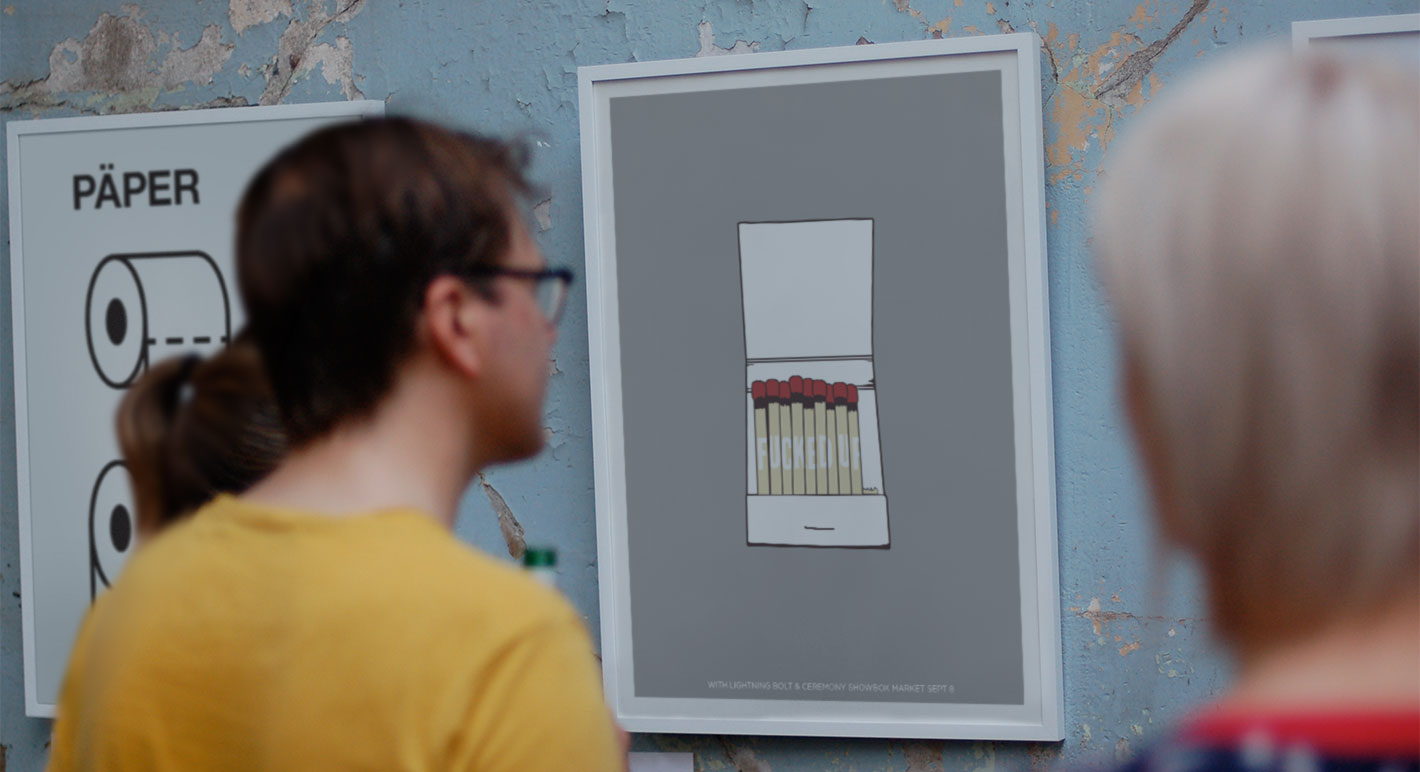
Gallery visitors viewing prints on weathered blue wall at 112 PrintWorks
Handmade prints, affordable prices, and a lot of attitude.
2011
Opened in Fremont, Seattle
12+
Events hosted per year
0
Clients. That was the whole point.

Seattle had collectors with nowhere to shop and curious people with no way to watch the work get made.

Rock poster culture had a devoted following in Seattle, but no physical home. Collectors were hunting eBay. People who loved the work couldn't always afford it, and most had no idea how it was made. The prints they were chasing were screenprinted by hand on a flatbed press, often in editions of 50 to 200, using hand-mixed inks and careful registration on each pull.

There was a craft story nobody was telling. So I rented a space at 112 N 36th Street, built the interior walls myself, moved in a screenprint press and a 1955 Chandler and Price letterpress, and opened. I had no investors, no partners, no client to answer to, and no roadmap. I also had a very clear idea of what the place should feel like.
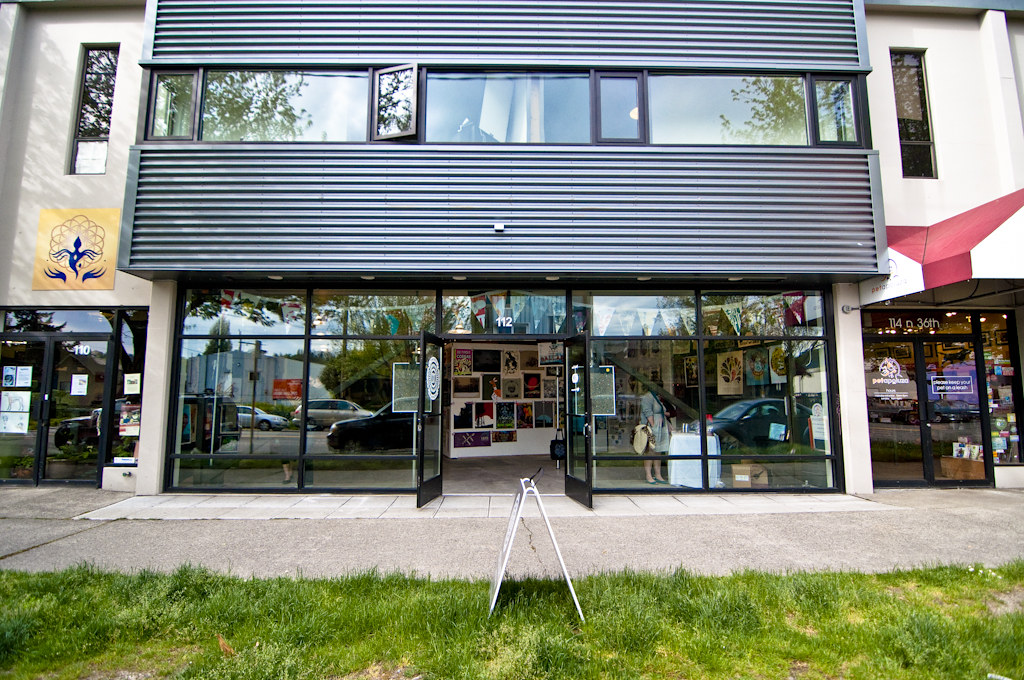
112 PrintWorks storefront at 112 N 36th Street, Fremont
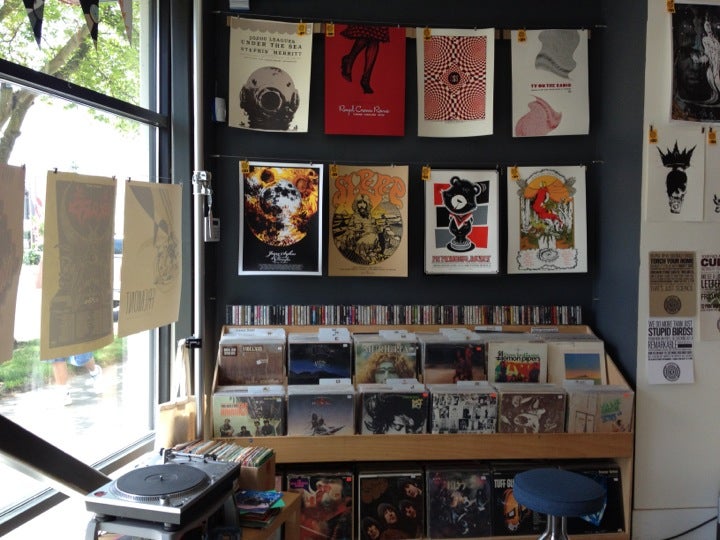
112 PrintWorks logo etched on front door glass Interior of 112 PrintWorks, vinyl records and poster display

"A working print shop and a retail gallery in the same room. The letterpress lived in the corner where people could watch it run during openings. The craft was part of the show."

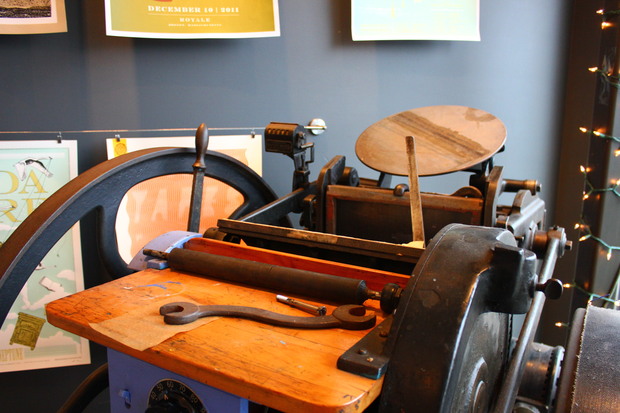
1955 Chandler and Price letterpress at 112 PrintWorks
The 1955 Chandler and Price. Slower than screenprinting, louder, and considerably more theatrical.

The promotion was half the brand.

I wrote all the copy, set all the type, printed all the fliers, and then walked the neighborhood attaching them to every surface that would hold a staple. The voice was deliberately not corporate. It was opinionated, specific, and a little rude in the most welcoming way possible.

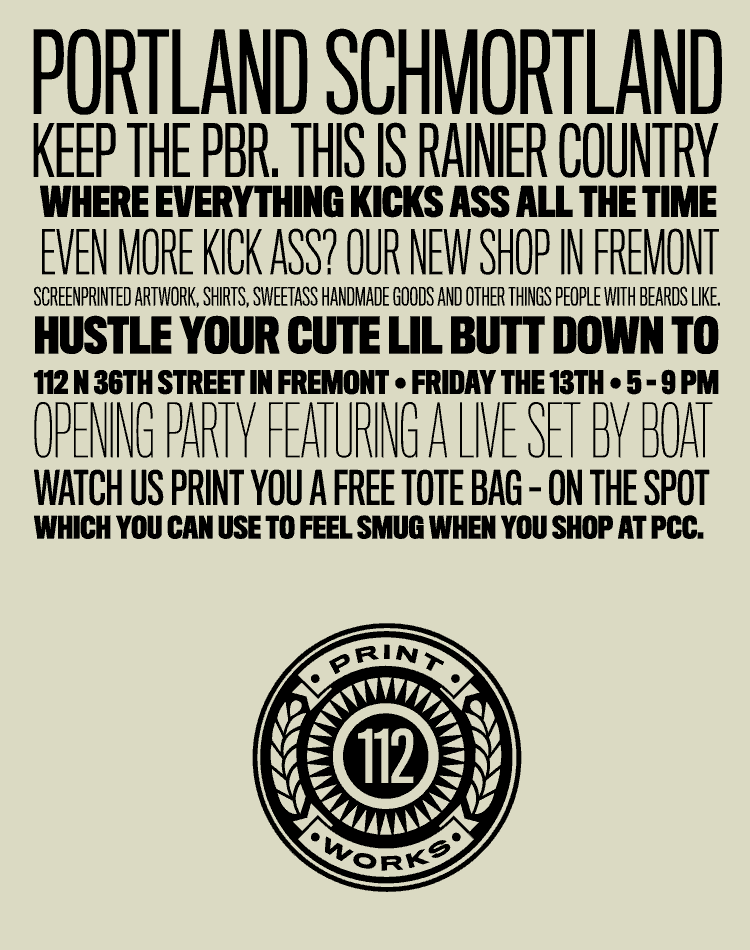
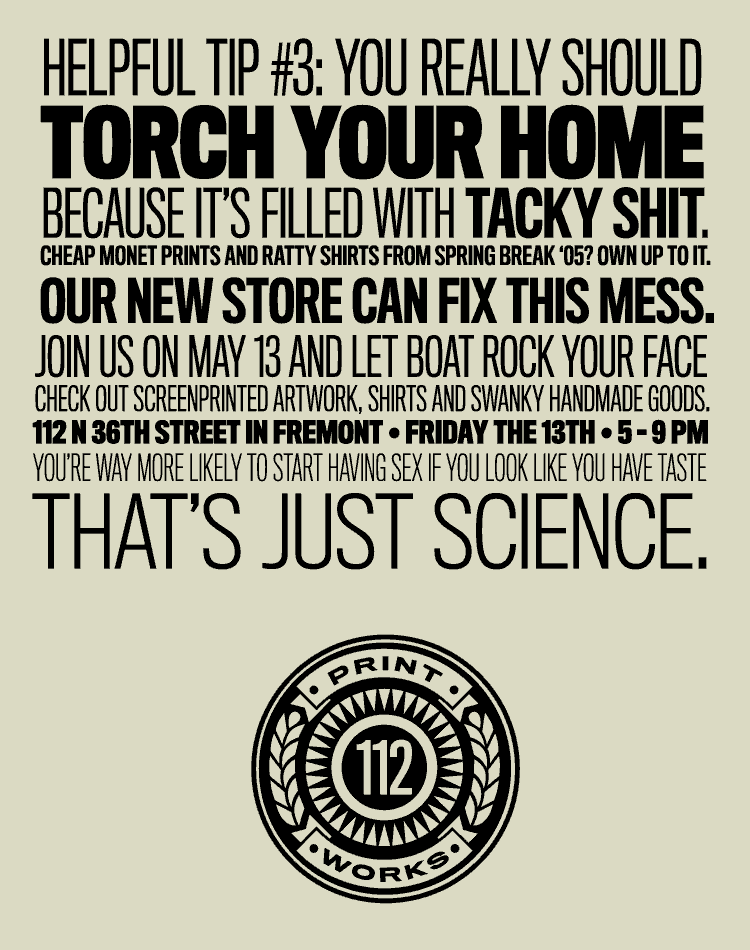
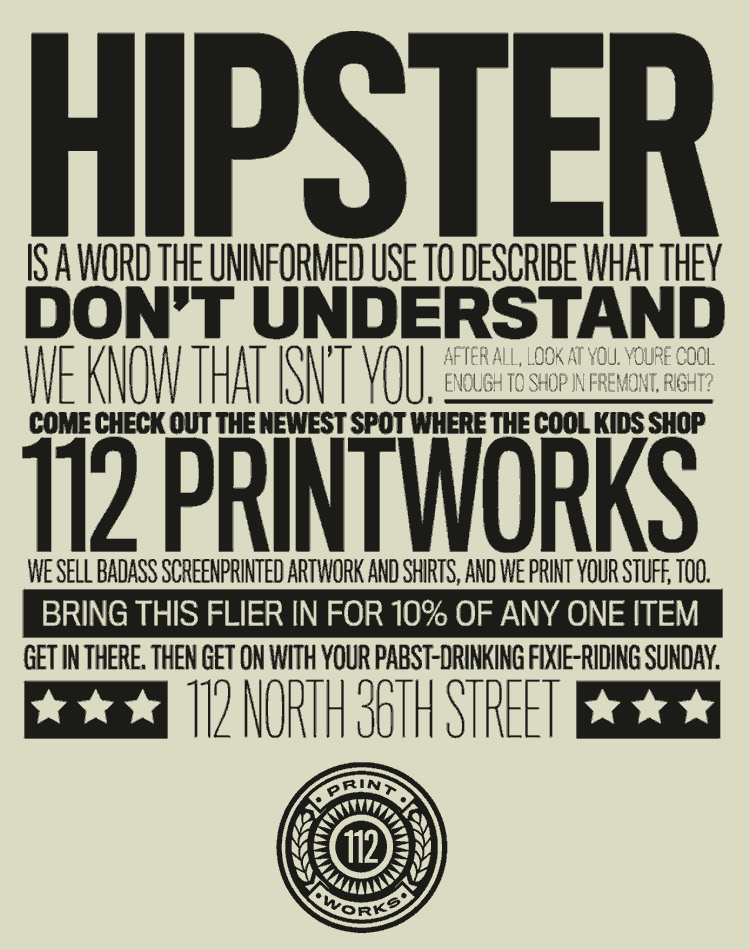
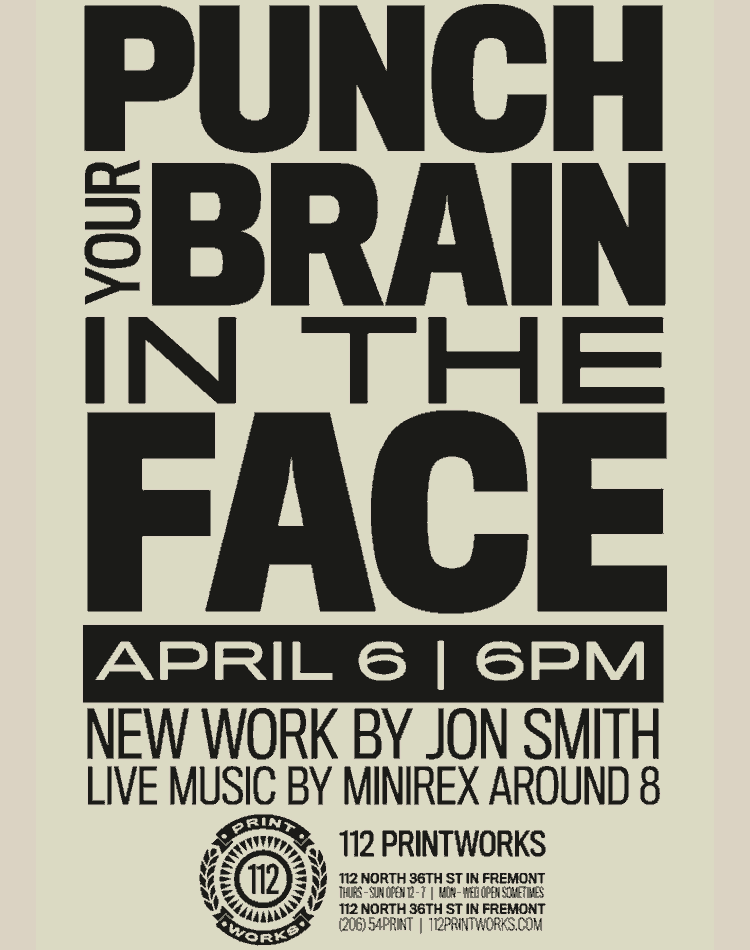
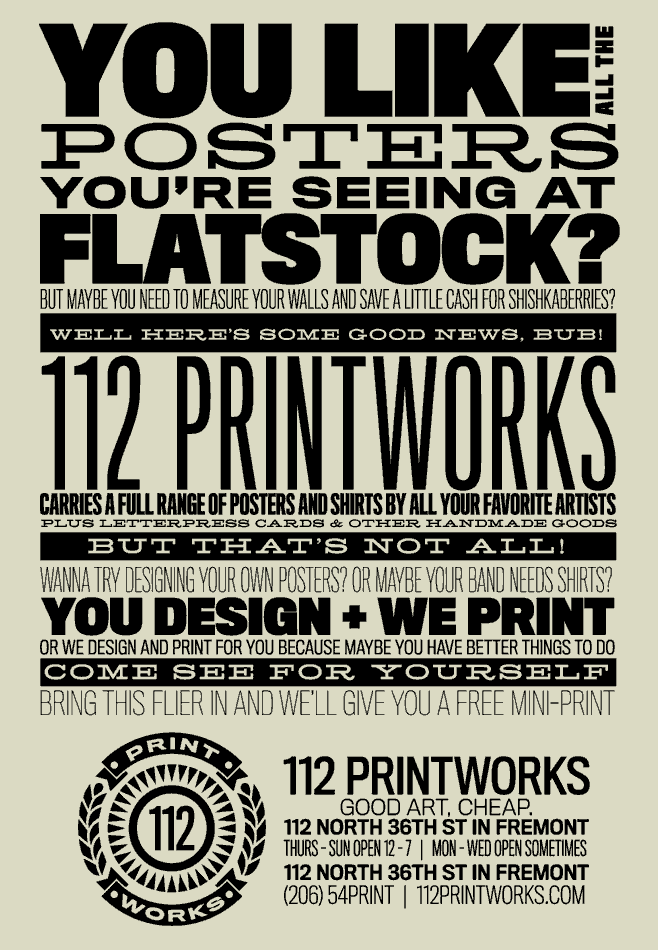
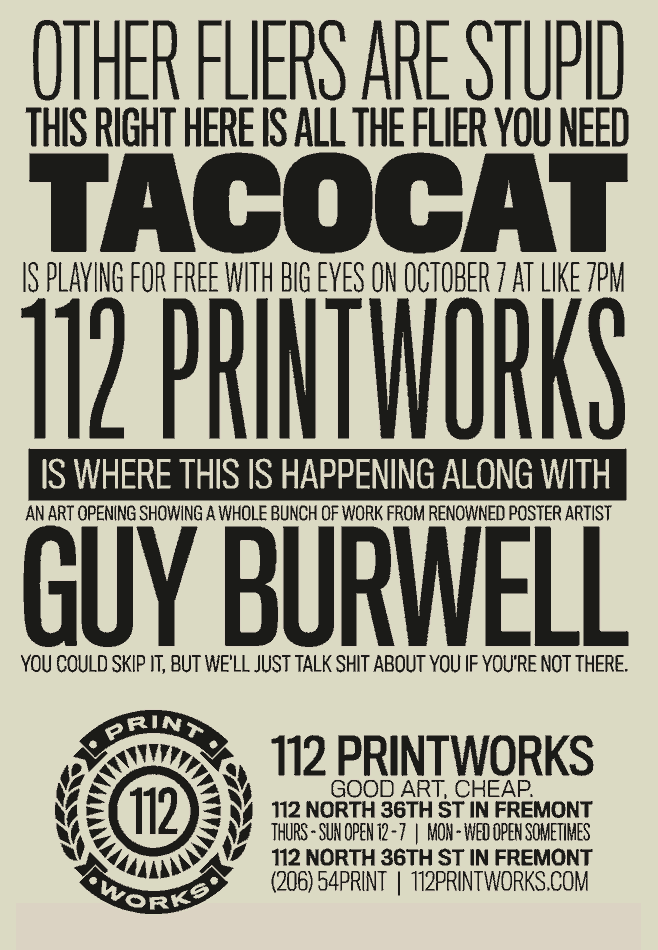
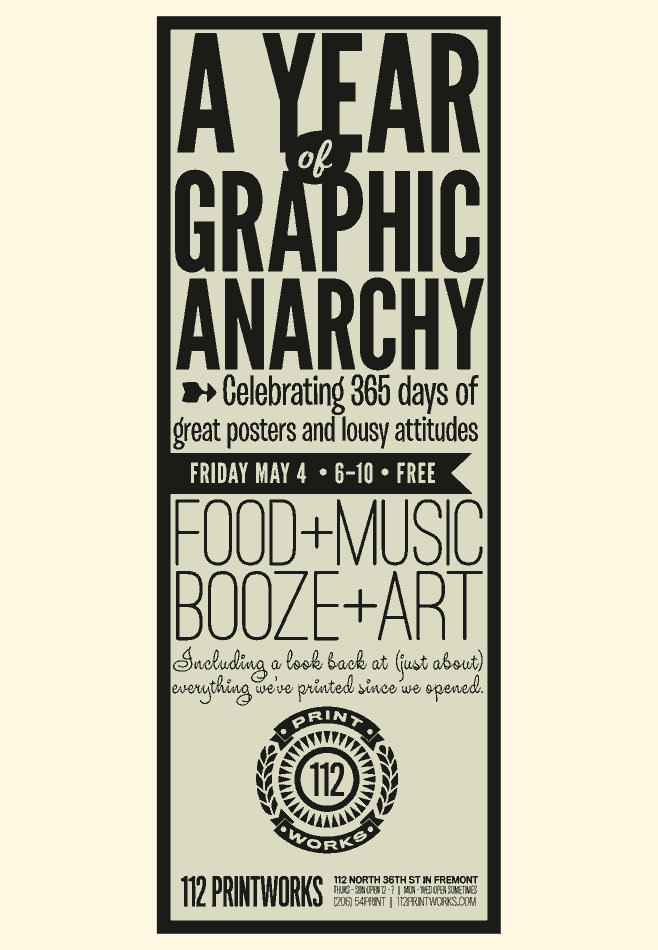
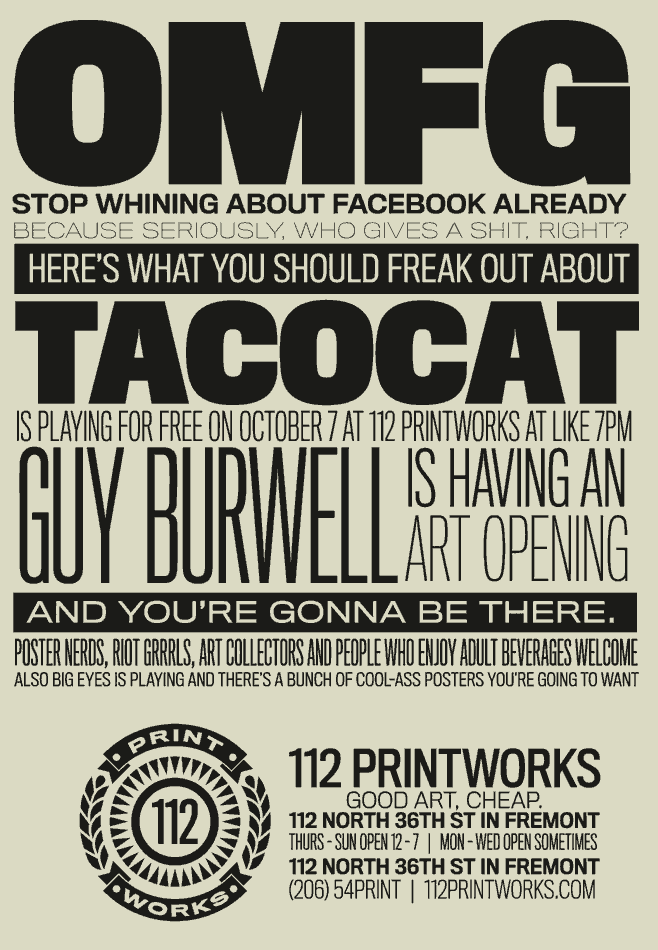
Screw Portland. Torch Your Home. Punch Your Brain in the Face. Every opening had a flier, every flier had a joke, and the jokes were all basically the same joke: we know exactly what we are, and so do you. The fliers weren't marketing for the store. They were the store.

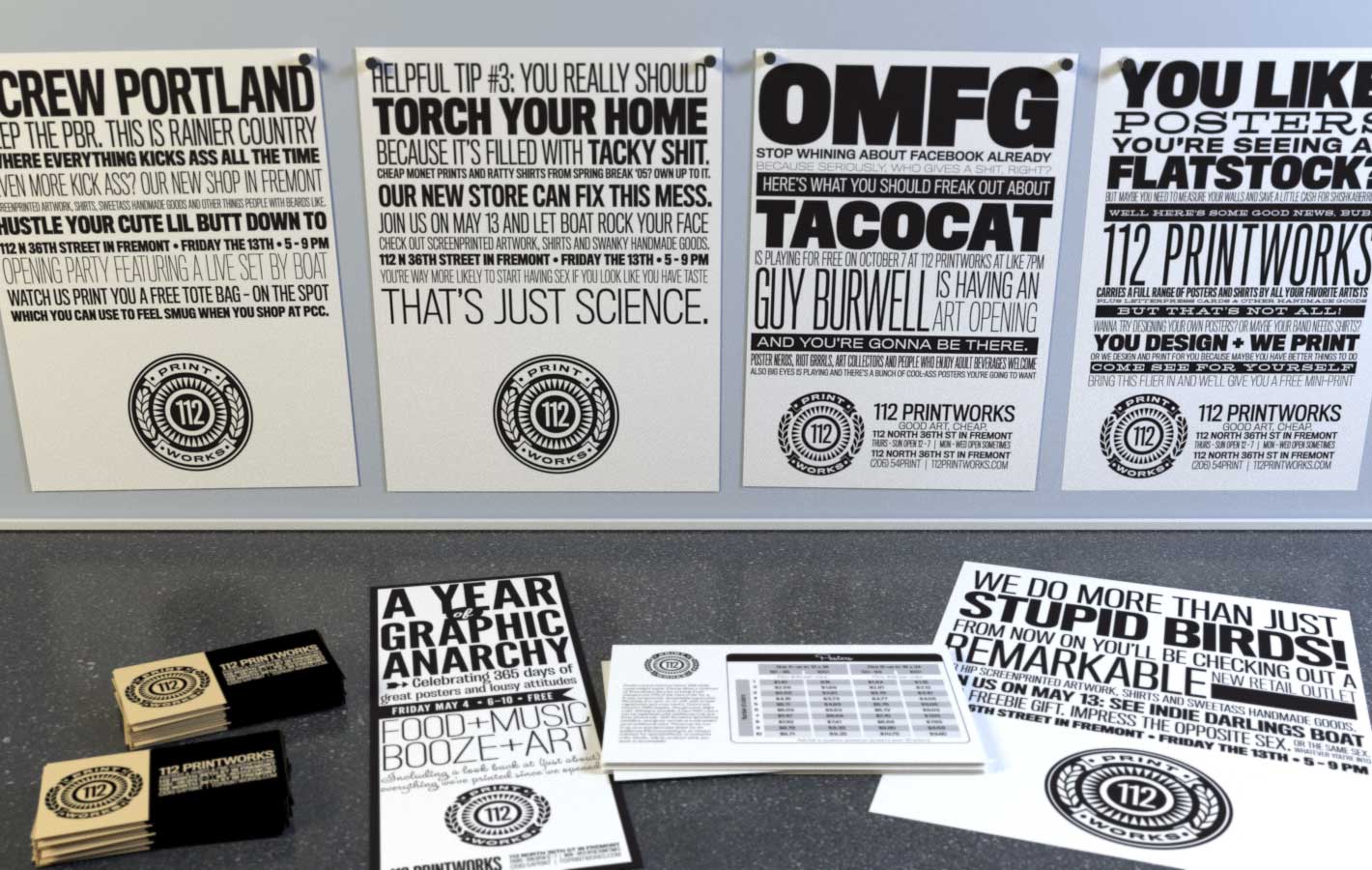
112 PrintWorks fliers pinned on wall plus table with business cards
A year's worth of event fliers, each one printed on press. The business cards were printed in-house too.
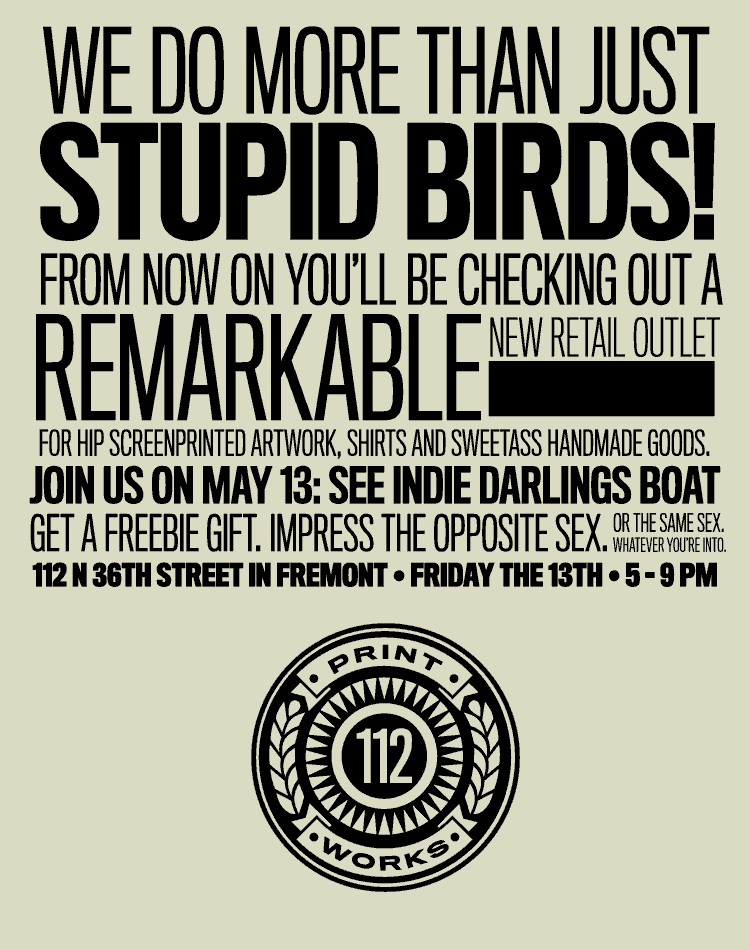
112 PrintWorks flier 112 PrintWorks flier 112 PrintWorks flier 112 PrintWorks flier 112 PrintWorks flier 112 PrintWorks flier 112 PrintWorks flier 112 PrintWorks flier 112 PrintWorks flier
Individual flier designs. Typography-first, voice-forward, printed in runs of a few hundred on the store's own presses.
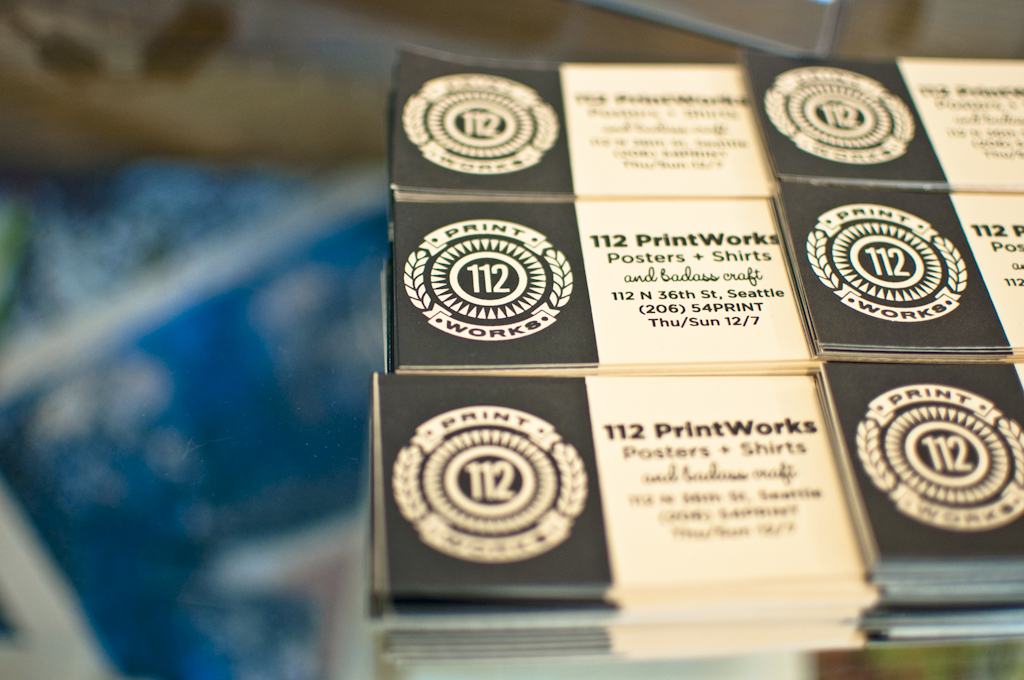
112 PrintWorks business cards, black and cream, letterpress printed
The business cards. Posters + Shirts and badass craft, 112 N 36th St, Seattle.

The best poster art we could find, at prices people could actually afford.

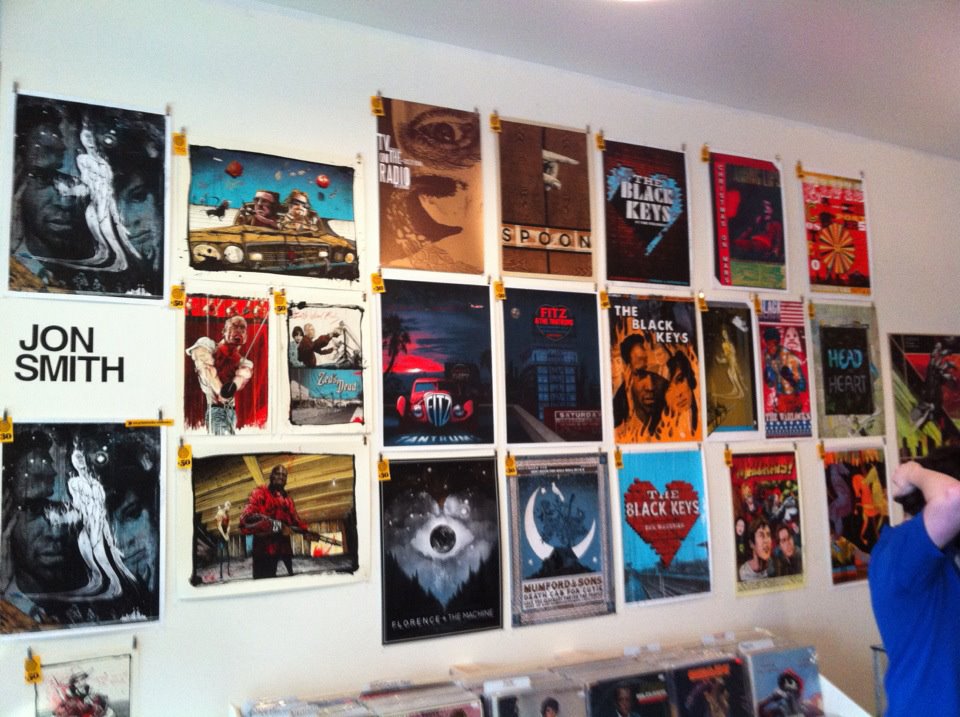
The retail floor ran on consignment from regional artists alongside work printed in-house. Band posters for Mudhoney, the Black Keys, Spoon. Art prints that had nothing to do with music. The wall changed constantly as artists came in for shows, left work behind, and sold out of editions people didn't know existed until they walked through the door.

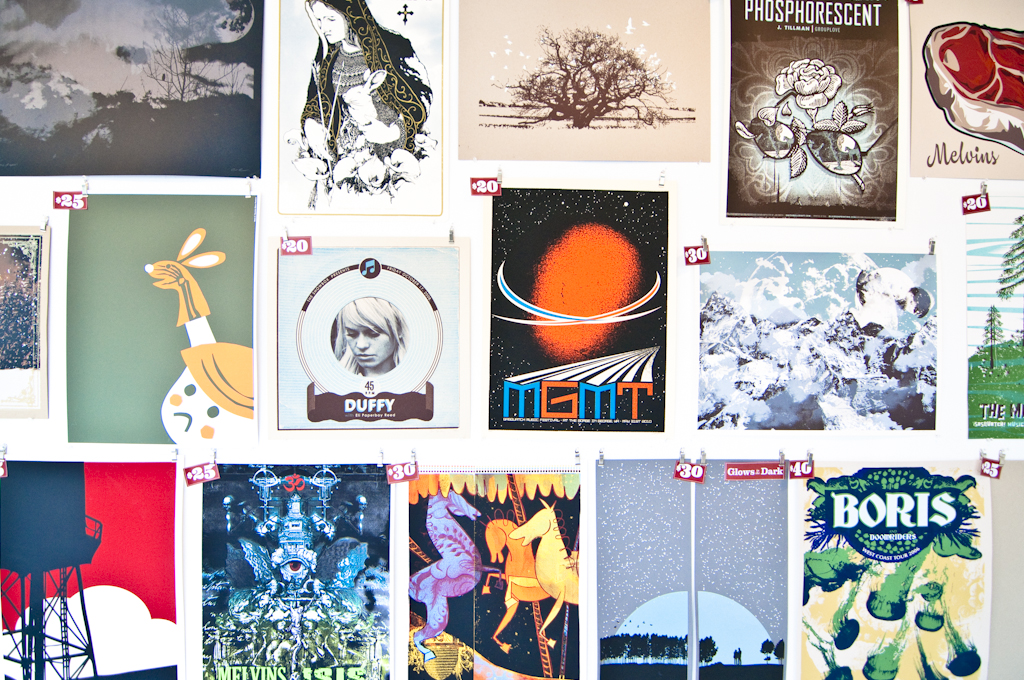
Every piece had a price tag. Most things were between $20 and $40. The idea was that somebody who'd never collected a poster before could walk in, find something they genuinely loved, and leave with it under their arm for the cost of a dinner out.

Colorful poster wall at 112 PrintWorks, MGMT, Boris, Melvins, Phosphorescent
The main display wall. The price tags were intentional. We wanted people to know this was buyable.
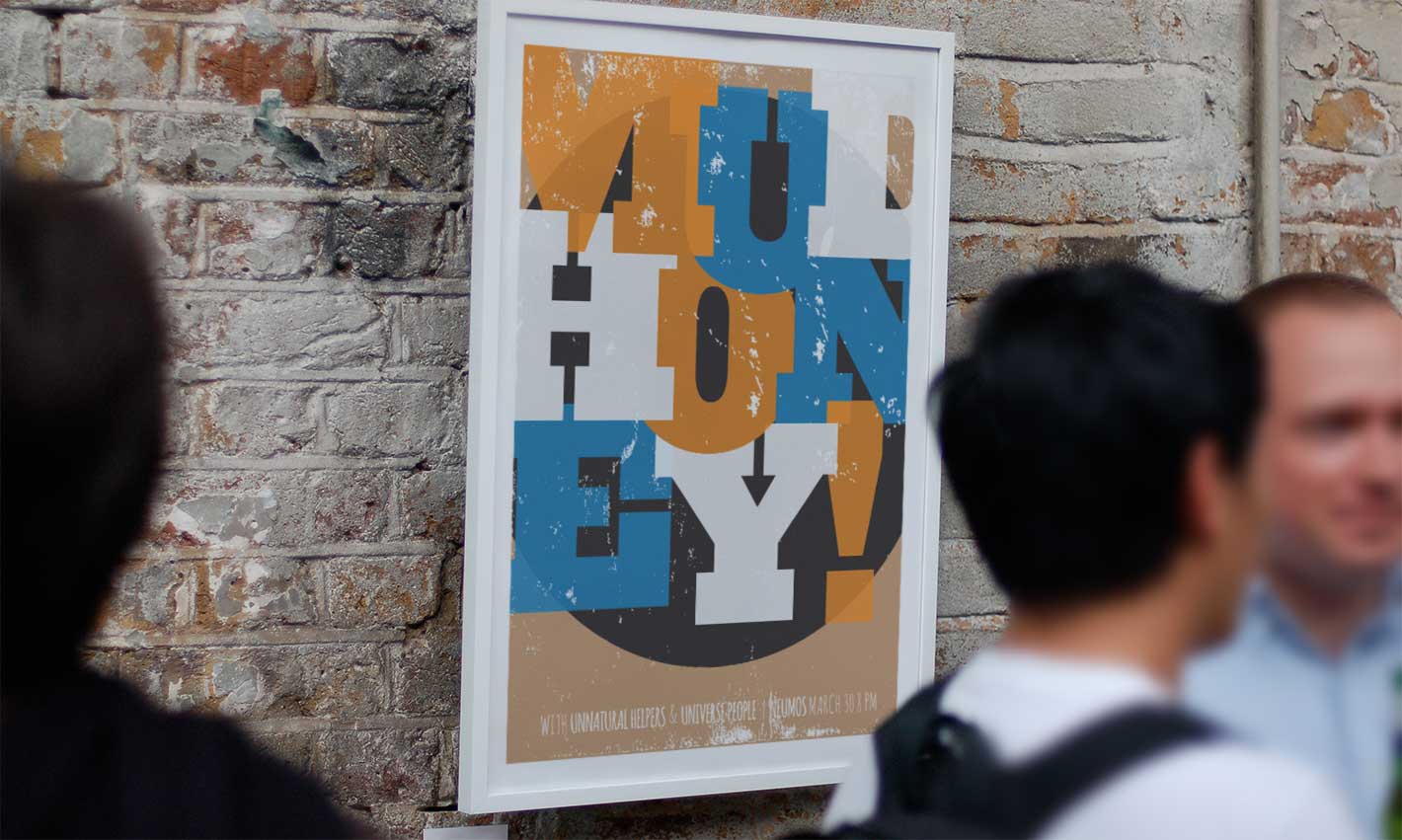
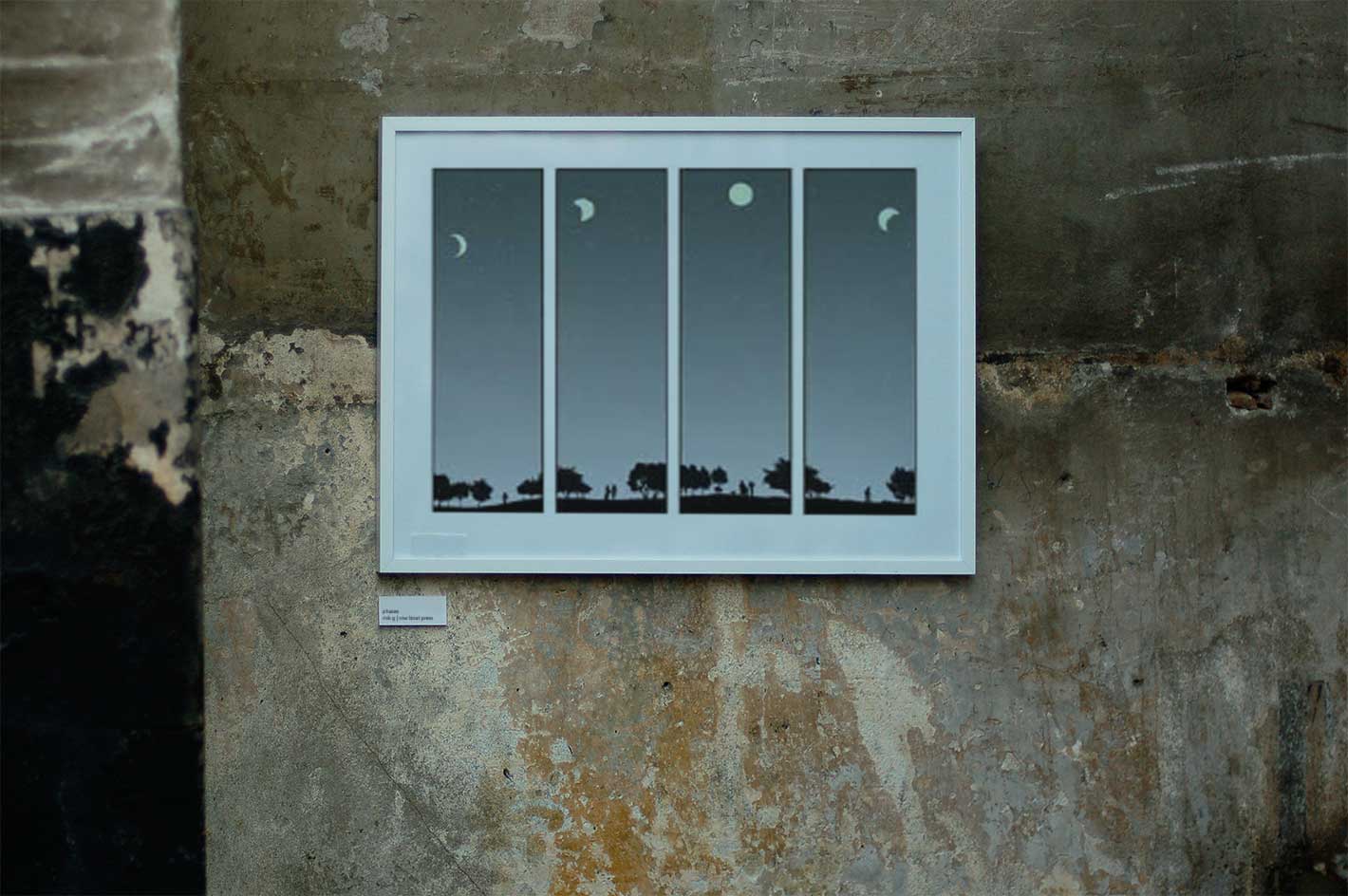
Mudhoney poster on brick wall at 112 PrintWorks opening Moon phases print in white frame on weathered concrete wall
Jon Smith solo show poster wall at 112 PrintWorks
Jon Smith's solo show. Spoon, Black Keys, TV on the Radio, Florence and the Machine. His work sold well enough that he got the whole wall.
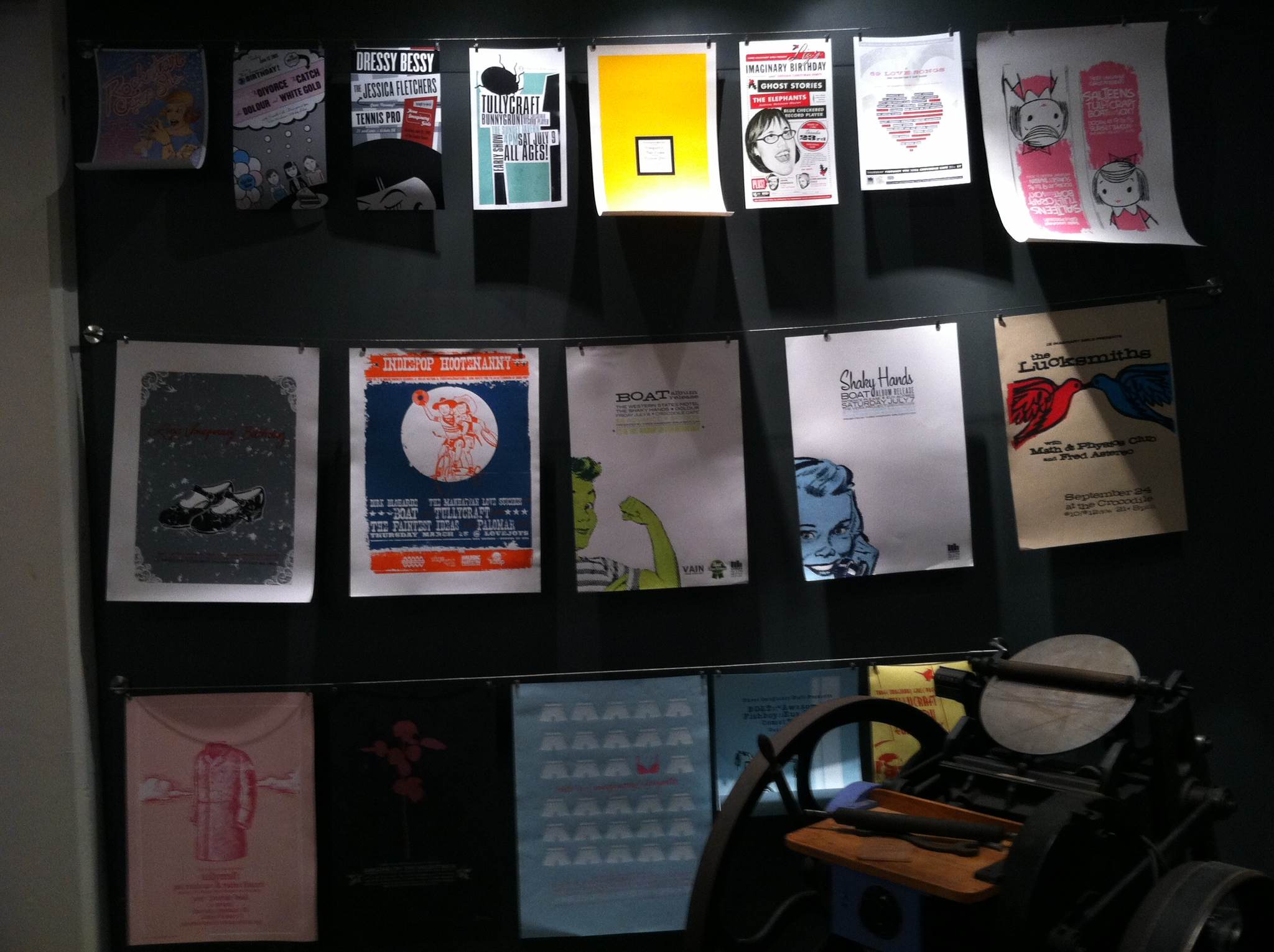
Dark display wall with posters on rails and letterpress in corner

Every flier in the shop was printed in the shop.

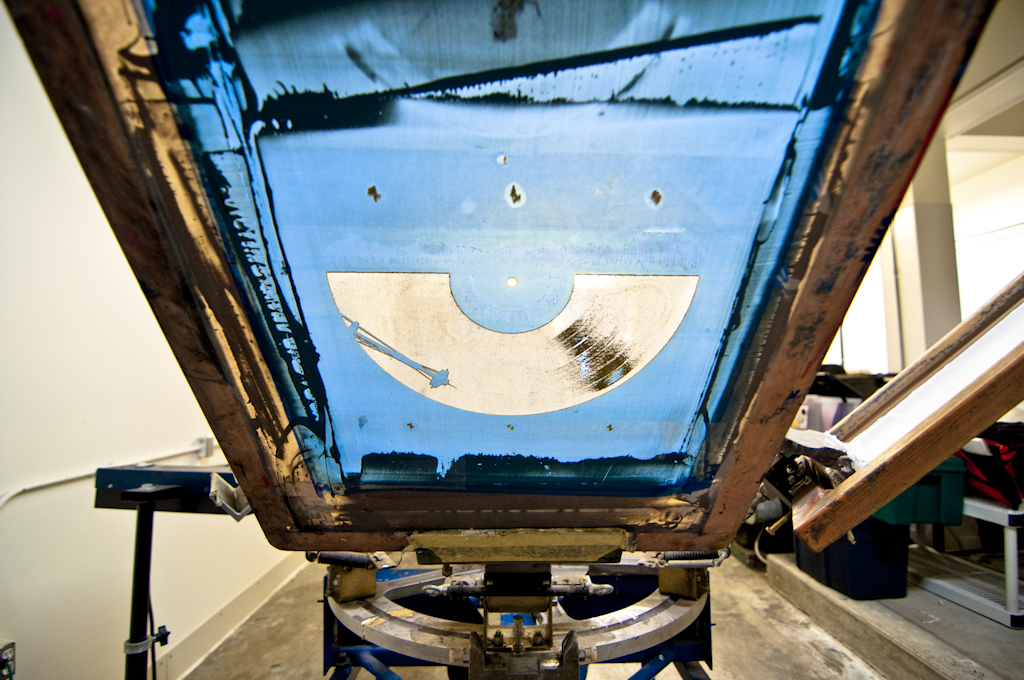
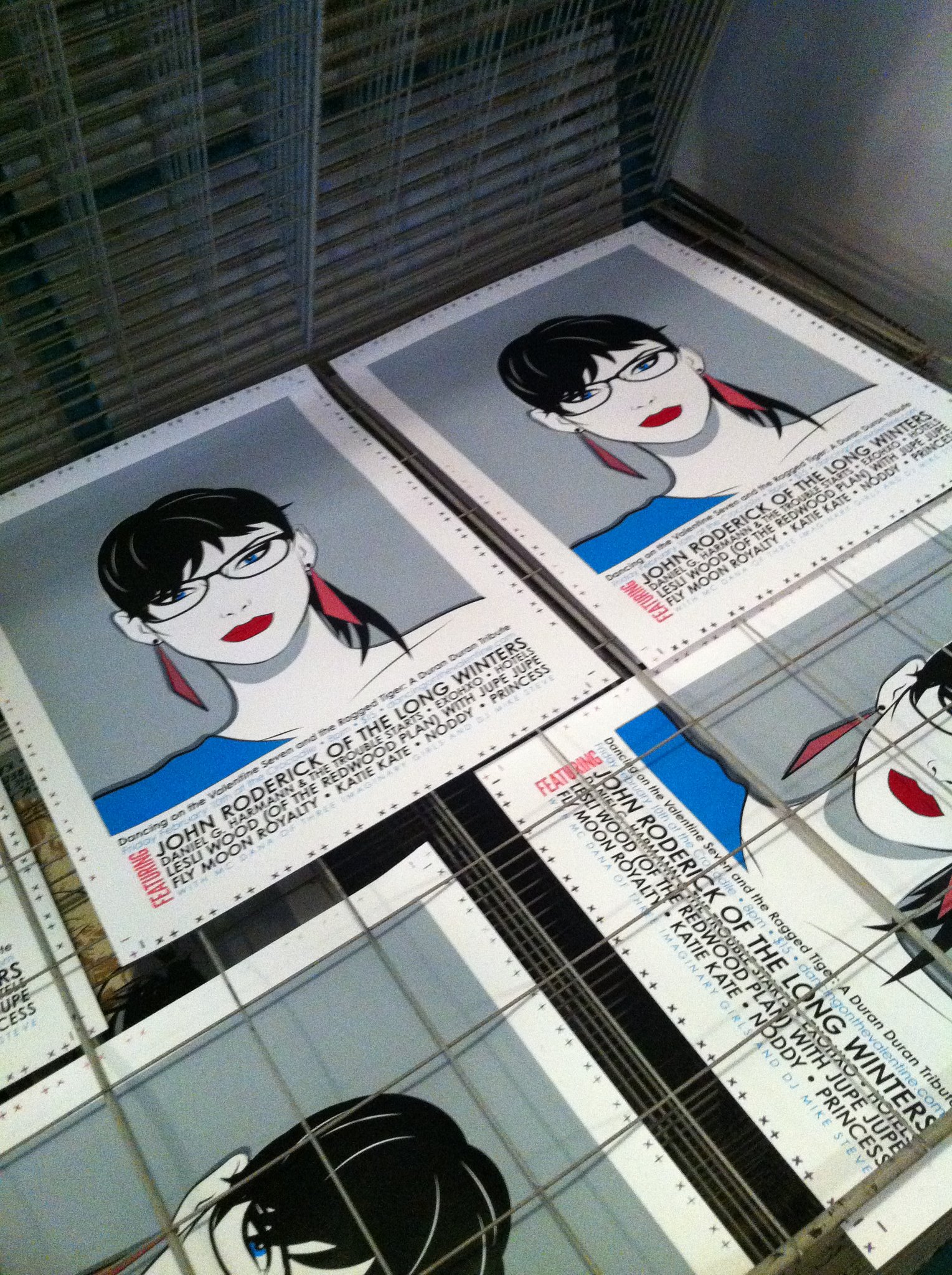
The screenprint press ran in the back during openings. People could watch a shirt come off the press and buy it still warm. The screen exposure process, the registration, the pull, the rack... all of it visible to anyone who wanted to watch. Demystifying the process was part of the point. Once people understood how the work was made, the price tags started to make a different kind of sense.

Screen with design exposed, blue emulsion, screenprint press John Roderick of the Long Winters posters drying on rack
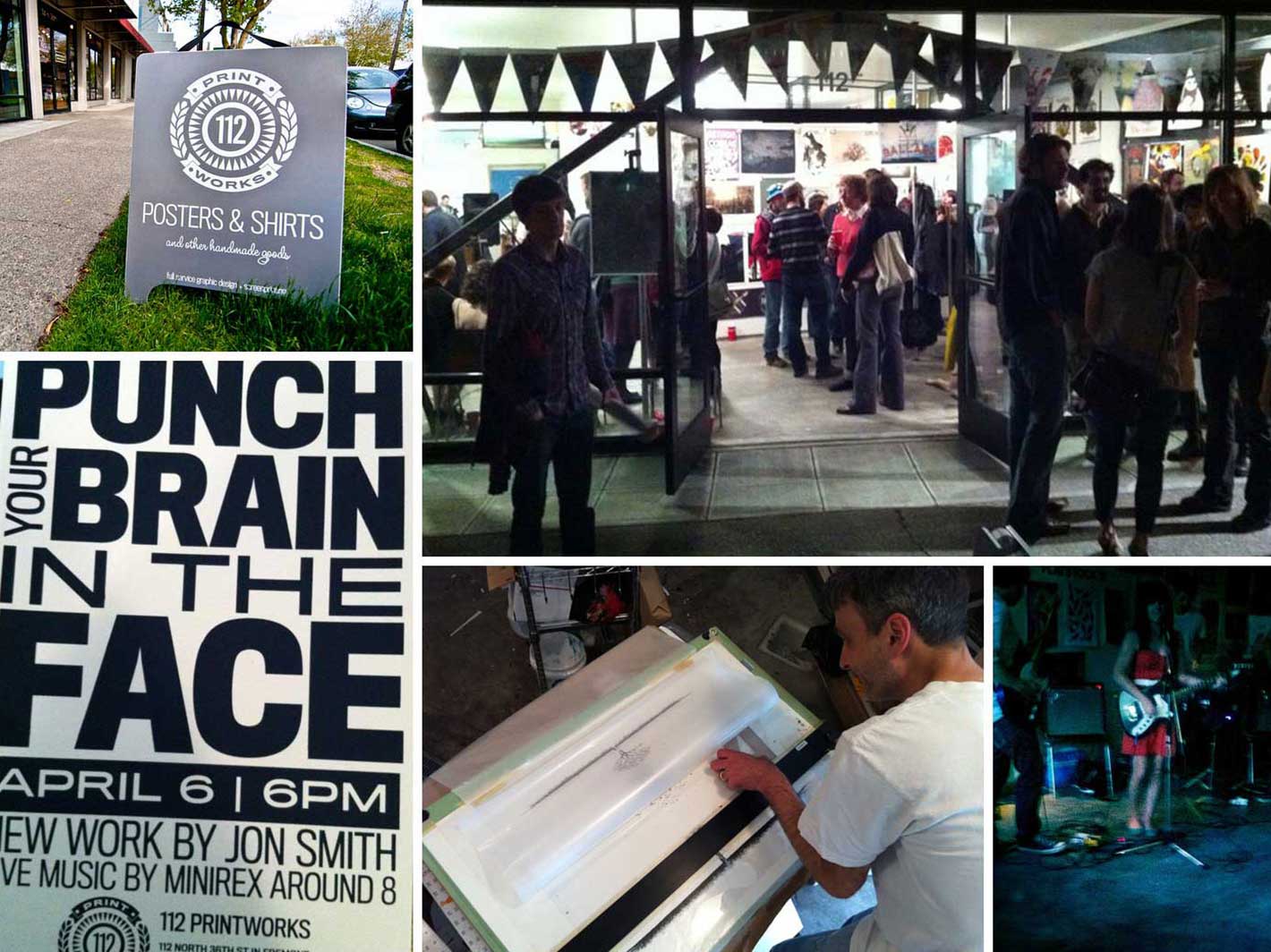
112 PrintWorks montage: sandwich board, opening crowd, flier close-up, Rick at press, live show
The full picture: the sign out front, the crowd at the door, the flier, the person at the press, the band in the corner.

One designer. One band. Once a month.

The format was simple and it worked. Book a poster artist for a solo show. Pair them with a band that fits the vibe. The band sets up in the corner. The artist is there to talk about the work. We screen a free tote bag on the spot so there's something to watch. People show up because the openings are worth showing up for, not because of a discount or a subject line.

I hosted classes from the Seattle Video and Art Center, offered small group instruction, ran letterpress demos so people could pull their own print and take it home. The goal was always the same: make the store a place worth coming back to, not just a place to buy something once.

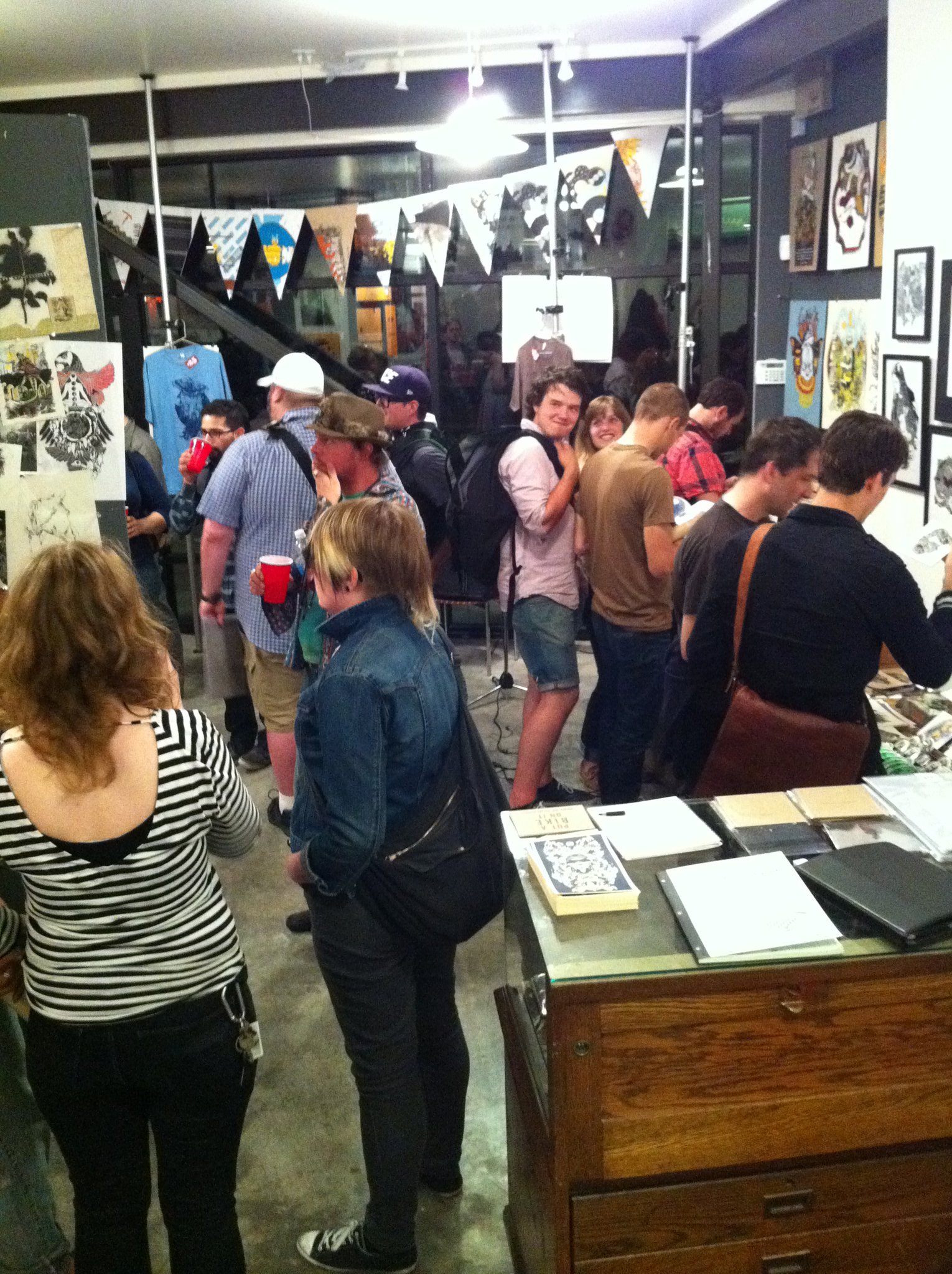
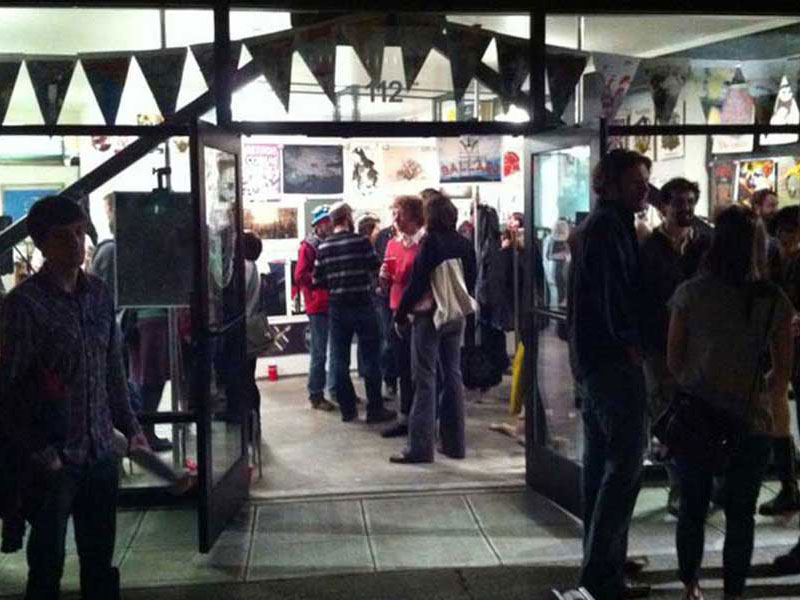
Opening night interior crowd at 112 PrintWorks Night exterior of 112 PrintWorks, crowd spilling out the door
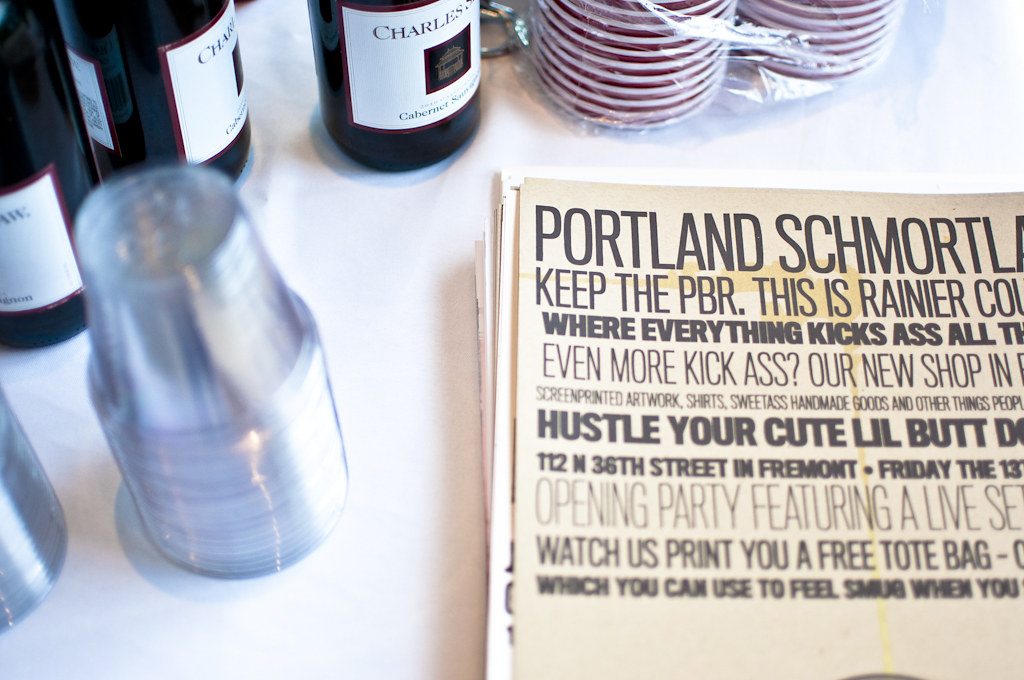
Portland Schmortland opening flier with wine bottles on table
Scenes from the grand opening. Cheap wine and snarky fliers.

After years of buttoned-up marketing, I wanted to get dirty.

I built the place, the audience, and the reason to care, from nothing. I ran it alone: the presses, the programming, the retail floor, the fliers, the numbers. The community showed up because there was something real to show up for.

Most portfolio work exists in service of a client objective. This was the unusual case where the design, the production, the event programming, and the voice were all expressions of a single point of view with no brief and no approval chain. Every decision was mine. Every result was mine too.

The thing I still like about it: people came.

In Summary

Built a screenprint and letterpress gallery from nothing. Wrote the copy. Ran the presses. Hosted the shows. Kept the books. People came, came back, and told other people.

Next case study
Two Many Cooks: When clients become collaborators